.jpg)

We all love the affiliate channel. It’s the "risk-free" dream, right? You only pay when you see the money in the bank.
But here’s the reality: if you aren't looking at your traffic forensically, you aren't just paying for performance, you’re being taxed on your own hard-won organic sales. This isn't just a "compliance issue"; it’s straight-up attribution theft.
The "Door-Stop" Scam (How it actually works)
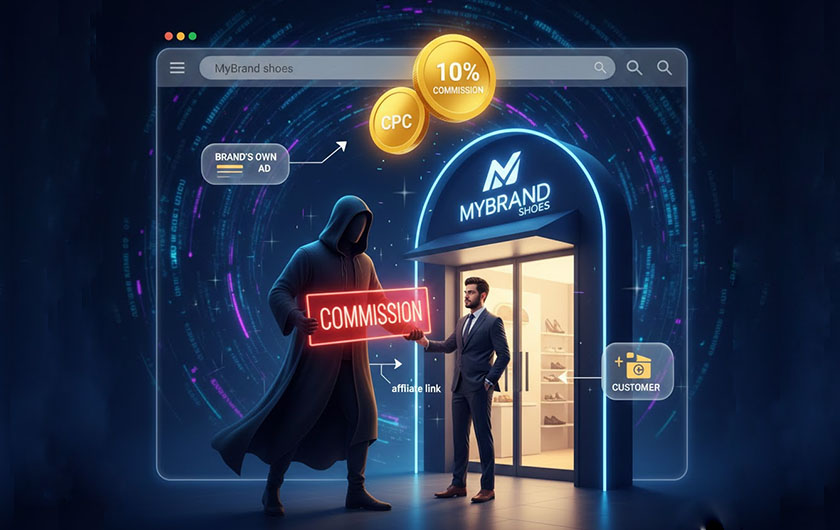
Imagine a customer, let's call him Ankit. Ankit already knows your brand. He wants your shoes. He goes to Google and types your name directly.
In a clean world, he clicks your organic link. Cost to you? Zero. But in a world of unmonitored brand bidding, an aggressive affiliate is waiting. They have bid on your brand name, and their ad sits right at the top.
The process is invisible to the user:
- Ankit clicks the top ad, thinking it’s you.
- The browser flickers for a millisecond. That’s the affiliate "stuffing" a cookie via a hidden redirect.
- Ankit lands on your site and buys.
- The Result: You just paid a 10% commission on a customer who was already standing at your front door.
The affiliate didn't "find" you a customer. They just charged you a toll for letting Ankit into your own store.
The Double-Dip: You’re Funding Your Own Competition
The financial hit is worse than you think.
- Loss #1: You are handing over 10% of your margin for a sale you already earned.
- Loss #2: You are in a bidding war against yourself. By bidding on your terms, these affiliates drive up your CPCs.
You are effectively paying your partners to make your own marketing more expensive. It’s a ridiculous cycle.
Why Your T&Cs Aren't Protecting You
You probably have a clause saying "No Brand Bidding." You think you’re covered. You aren't. Fraudulent affiliates are smart enough to stay under your radar using a few "dark" tactics:
- Geo-Fencing: They block their ads from appearing in your HQ city. If you’re in Mumbai, the ads only show up in Delhi or Bangalore. You’ll never catch them by "Googling yourself."
- Night-Shifting: They only run ads from 1:00 AM to 5:00 AM or on Sundays when your marketing team is asleep.
- The "Typosquat": They bid on common misspellings of your brand. You aren't checking for those, but your customers are typing them.
The "Coupon" Ghost Town
This is the classic trick. Coupon sites rank for "[Your Brand] + Discount Code" even when they have zero valid codes. A user clicks, gets hit with a "Code Not Found" message, but the affiliate cookie is already set. When that user buys at full price, that coupon site which just gave your customer a bad experience gets paid.
The Paidclick Difference: We Bring the "Smoking Gun"
At Paidclick, we don't just "guess" that fraud is happening. We provide the forensic evidence needed to get your money back.
- Global Eyes: We monitor SERPs from hundreds of locations simultaneously. No more hiding via geo-blocking.
- Video Capture: We record the actual user journey. You can see the redirects happening in real-time.
- Packet Logs (WARC): This is the gold standard. We capture the raw network traffic the "DNA" of the violation. It’s legally admissible proof you can take to your network to claw back those stolen commissions.
Bottom Line
Your affiliates should be rewarded for finding you new business, not for taxing your existing fans. Stop acting as a "donation center" for opportunistic partners.
Validate your traffic. Enforce your rules. Stop paying for what you already own.